
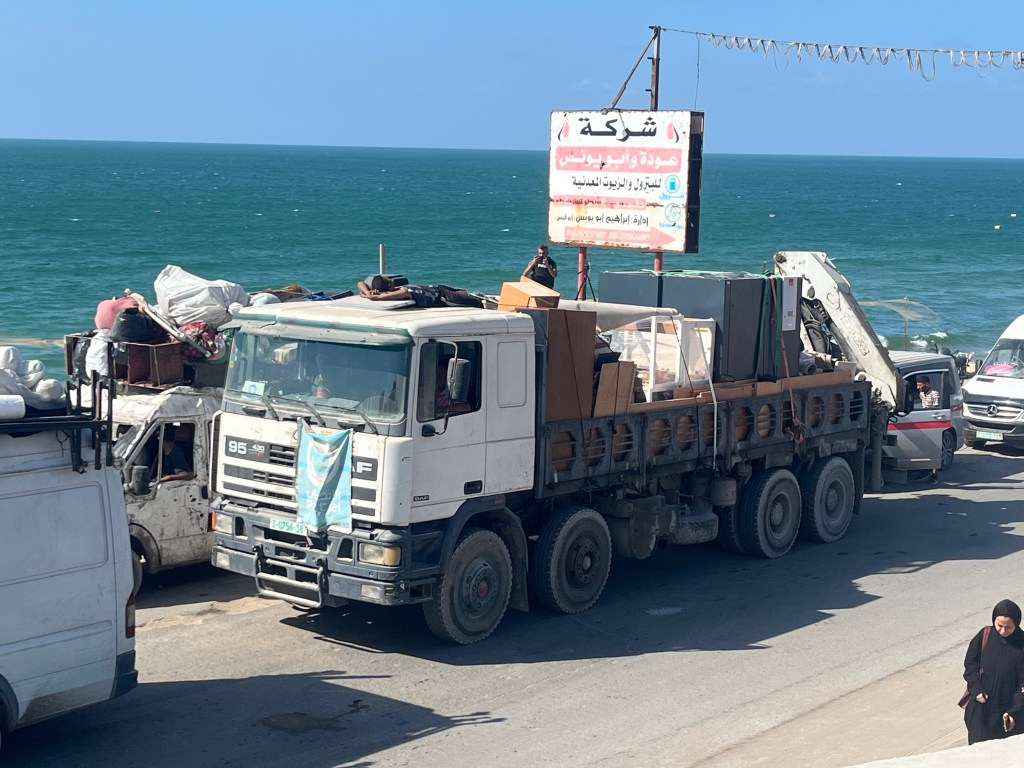
Thousands of dollars are being pocketed in backhanders by the Israeli occupation to allow non-charity food trucks from Jordan into Gaza via the West Bank.
That’s according to Palestinian aid workers, who say traders are coerced into paying these IDF-imposed fines to get food trucks past the checkpoints and across heavily controlled border crossings such as at the King Hussein Bridge which spans the River Jordan near Jericho, connecting Jordan with the West Bank.
Senior Operations Manager for Muslim humanitarian aid charity SKT Welfare Fadi Omar says he has witnessed these exchanges and that secret payments can amount to as much as half-a-million dollars.
He says this, in turn, has helped to cause the backlog sitting in Jordanian warehouses and for inflation to soar – with 1kg of meat having risen from 7 dollars to 100 dollars.
“Prices across the board have increased nearly 15-fold thanks to these cargos being reportedly allowed entry – for a fee – behind the scenes,” says Fadi.
“Meanwhile other essential aid trucks remain stuck at the borders.”
Fadi says it, too, often has five convoys of aid stuck at the border with no cooperation from the occupation to enter the West Bank.
This echoes reports from other aid workers and independent traders attempting to enter Gaza via Rafah in the south. They claim that food has been sitting rotting at the crossing due to delays in the partial re-opening of the 12km border between Egypt and the Gaza Strip – something which Israel has attributed to the Egyptian authorities.
Egypt, which has been the most efficient access point for aid and food trucks to enter Gaza since 2007, has a well documented history of reportedly taking bribes, illicit trade and smuggling – previously described in the country’s 2020 GAN Integrity risk report as “Egypt’s way of getting things done”.
The Arab country has since been accused of both taking bribes from food traders and aid trucks to enter Gaza and from Palestinians looking to flee – something which Egypt firmly denies. The Egyptian Government continues to control the crossing on its side of the border, with no Israeli presence other than checkpoints nearby in Rafah.
According to SKT Welfare, it’s now estimated that the average Palestinian family needs $3,000 a month just to survive on food and water.
But Fadi says the only alternatives for many living in poverty in Gaza are the Israeli and US-operated distribution sites which are still rife with mass killings and more than 40 deaths every day.**
“Just condemning Israel is not fixing the situation,” he says.
“It took 80,000 martyrs till the UN declared this a genocide and still nothing is happening. It’s too little, too late.
“The most important thing world leaders can do now is to put pressure on Israel to open the crossings and facilitate the continual and regular entry of humanitarian aid, including food, medicines, fuel and medical supplies.
“There are no antibiotics getting inside the Gaza Strip – forcing doctors to amputate patients’ limbs as their only option.* This is a disaster for humanity.”
Fadi and his family have been displaced more than eight times – first from Rafah to Khan Younis, then to Gaza City and back again multiple times.
“The situation is very difficult. We are living in a real disaster,” he says. “The occupation is gradually shrinking Gaza. Only one third of Gaza remains.
“The occupation is still deliberately targeting civilian areas under the pretext of fighting and eliminating Hamas.
“Rafah is entirely occupied now and only 25% of Khan Younis remains.
“There is no ceasefire. We are still exposed to daily raids and gunfire while the occupation focuses on emptying specific neighbourhoods one by one till they empty the whole of Gaza City. They are killing and destroying everything on the ground.
“There are more than 350,000 displaced citizens and fewer places to go. Eighty per cent of the population is now living in tents, which provide no proper shelter from the elements. They are hot in summer and extremely cold in winter. Elderly people and children, including babies, are dying every day.”
Displacement itself is hard. Fadi recalls calling more than 30 hauliers to try and transport the family’s belongings from the north to the south to set up camp all over again.
He says some families have been displaced 20 times and trucks are not always available. People are exhausted, he says. They have lost their homes, jobs and businesses as well as their savings.
“It’s a real struggle for survival. You have to be ready for anything. We are existing on the bare minimum on which life can continue.”
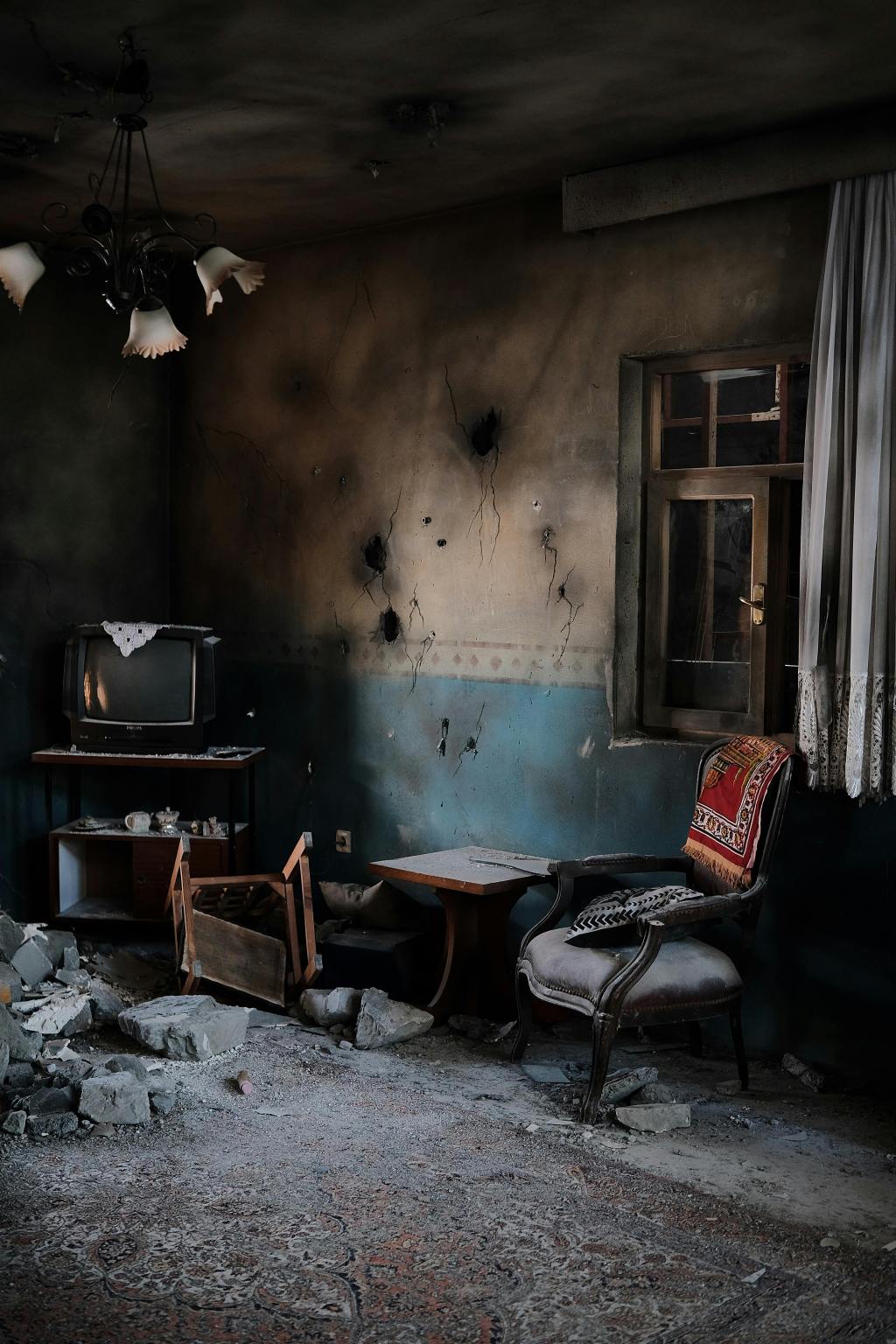
Fadi’s home in Rafah was destroyed by the occupation more than six months ago.
“Rafah is now completely flat,” he says. “Our home, our street, everything.”
Now Fadi and his family are given regular evacuation orders – typically every three months – with little time to gather what’s left of their belongings.
He, too, now lives in a tent – on the street. He and his family live under the constant hum of drones and fear of shelling.
Fadi walks more than an hour every day to a desalination plant to collect 80 litres of safe water so his family can drink and bathe. He says the collapse of the occupied territories’ infrastructure is one of the biggest challenges facing Palestinians now.
“After more than 700 days of conflict, Gaza’s infrastructure has been completely wiped out. We have no readily available water, electricity, cooking gas or sewage system.
“Before Israel banned cooking gas altogether, we were allowed 1kg of gas per family per month – not even enough to cook for 10 days. Now it’s even worse. It has been seven months with no gas so we are relying on wood but are unable to heat our tents.
“Needless to say, no heating in the tents will increase the mortality rate of the most vulnerable.
“It’s a real struggle for survival, but we are forced to handle it. There is no other option.”
So far, SKT Welfare has provided shelter for nearly 400,000 displaced Palestinians but Fadi says the world needs to pull together to change the situation in Gaza.
He believes we need to enhance international coordination and collectively place political pressure on all the parties involved to lift the blockade and stop its violation.
“The world needs to act now to enforce humanitarian law and human rights,” he says.
“We also need to expand the scope of humanitarian aid to include priority projects across information, security, health, shelter and education and provide more psychological support to those affected.”
This article was largely researched and written prior to the partial reopening of the Rafah crossing, which still remains heavily restricted – with limited and gradual numbers of Palestinians and further food trucks allowed to pass. Those able to pass through the key transit point between Egypt and Gaza in both directions have reported being subjected to humiliating searches and interrogations by the occupation at nearby checkpoints.
All eyes on Gaza; frequent attacks, arrests and shelling are all still underway. Keep talking about and campaigning for a free Palestine.
Sources:
Fadi Omar, Senior Operations Manager, SKT Welfare
Egypt country risk report | GAN Integrity
‘Only Those With Money Can Leave’: Gazans Pay Thousands to Escape Through Egypt | OCCRP
Egypt denies that fleeing Gazans are forced to pay bribes
Gaza doctors resort to amputation amid spread of antibiotic-resistant microbes
 THE PALESTINE OBSERVER
Leave a comment